Vision Hub

Across Satlyt / YouTube

$8M to build the intelligence layer for satellites.

Watch the Satlyt raise announcement.

Watch announcement
01 / 04

Stories & coverage.

43 stories
MediaLinkedIn

xOrbita Inc, Satlyt, and Symphony Space sign MoU

xOrbita Inc, Satlyt, and Symphony Space have signed a memorandum of understanding for the potential to explore modular, autonomous, and software-defined in-space infrastructure! This one rings home because we are three of TechCrunch's Battlefield 200 companies. We met in person at SmallSat and it was signed within twelve hours. Symphony Space is building modular orbital infrastructure: a station that hosts payloads and releases free-flying pods, then brings them back. Satlyt is building the software-defined layer that runs on the spacecraft. Onboard compute, orchestration, and the data path between elements. xOrbita Inc builds the guidance, navigation, and control. When a pod is released, approached, or docked, something has to make that call inside the authority the operator granted, and leave a record of why. These are three products may be groundbreaking among themselves, but together... they may bring a new age to the space-frontier.

Read coverage
MediaImagining Forward

How Satlyt Is Building the TCP/IP of Space

In 1983, TCP/IP turned a scattering of incompatible networks into one internet within a decade. Rama Afullo thinks satellites face the same challenge. There are thousands of space assets, none of them able to talk to each other. I sat down with Afullo, founder of Satlyt, on this week's episode of Space Terminal. His customers are satellite operators paying $1 to $20 per gigabyte to downlink data that's often corrupted, redundant, or useless by the time it lands. His fix is a software that runs on any satellite already up there.

Read coverage
MediaSpace Terminal by Imagining Forward

How Satlyt Turns Any Satellite Into a Data Center | Rama Afullo | #14

Satellite operators pay up to $20 a gigabyte to send data down to Earth. Up to 90% of what they downlink is corrupted, redundant, or useless before it even lands. I put Rama Afullo, founder of Satlyt, in a room to explain why he walked away from the vertically integrated model everyone from SpaceX to Starcloud is chasing, why coordination is the real wedge in space right now, and how a two-year-old software startup ended up with Google DeepMind publishing a case study on its work.

Read coverage
MediaAbove the Clouds: Stories from the Boardroom

Google Said No. SpaceX Said No. He Built It Anyway.

Satlyt founder Rama Afullo discusses the journey from proposing in-orbit compute at Google and SpaceX to building Satlyt, along with onboard AI, satellite data bottlenecks, software-defined networking, and an open software ecosystem for space.

Read coverage
MediaTailscale

The TailscaleUp keynote

Satlyt appeared prominently during Tailscale's TailscaleUp 2026 keynote, highlighting Satlyt among the companies putting modern secure networking infrastructure to work in new computing environments.

Read coverage
Blog

What Happens When the Satellite Starts Thinking?

From watching aircraft in Kenya as a child to engineering spacecraft at NASA, my path has always been driven by the possibilities of flight. Today, the most exciting frontier in aerospace isn't just about getting machines into orbit, it’s about what happens when the satellite starts thinking for itself.

Sharon NjeriRead story
MediaGoogle for Startups

The next AI breakthrough is in the stars

Google for Startups highlighted Satlyt's work bringing AI compute into orbit, including an "orbital doctor" built with Google Gemma and Gemini 2.5 to diagnose and address satellite faults in real time.

Read coverage
MediaUniversity of Cape Town

The Entrepreneurial Edge: UCT and WITS alumni leading innovation in the USA

This dynamic conversation brings together alumni from both universities for an inspiring exchange on entrepreneurship and innovation. Hear firsthand from founders who began their journeys in South Africa and went on to build successful ventures in the United States. They will share the lessons they carried from campus, the challenges of launching companies across borders, and the insights that shaped their paths as entrepreneurs. Join us for an engaging discussion filled with real stories, bold ideas, and the spirit of innovation that connects these alumni communities.

Read coverage
MediaSpace Madness Podcast

Space Madness Podcast Episode 56: Virtual AI Data Centers in Space

In the rapidly evolving landscape of satellite technology, one question looms large: How can we optimize the vast resources of satellites to create more efficient networking solutions? In this episode, we explore insights from Rama Afullo, the founder and CEO of Satlyt, who is pioneering a unique approach to treating satellite networking as a shared resource. With a background in mechanical engineering and experience at industry giants like Tesla, Google, and SpaceX, Afullo shares his vision for a future where satellites operate as nodes in a virtual AI data center in space.

Read coverage
Blog

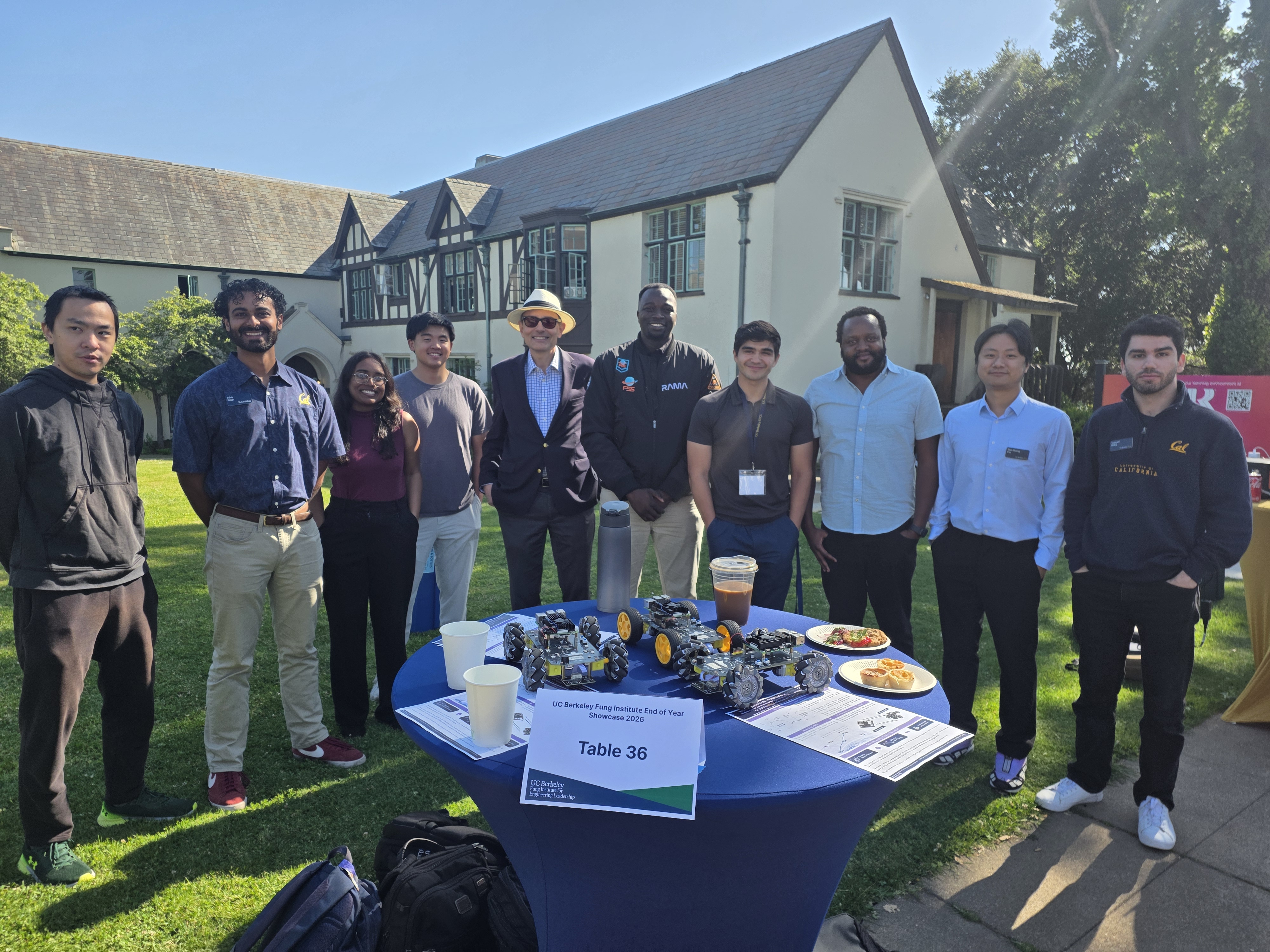
From Capstone to Orbit: How Satlyt and UC Berkeley Are Building the Future of Autonomous Space Systems

UC Berkeley’s award-winning Satlyt Capstone teams are helping shape the future of autonomous space infrastructure. What began as a collaboration around edge AI and satellite networking has evolved into a broader effort exploring Foundational Small Language Models for Satellites, distributed orbital computing, and autonomous in-space operations. Following the winning of the Fung Institute MEng Technical Leadership Award, Satlyt and Berkeley are now exploring additional collaborations including NASA STTR opportunities and future Capstone projects focused on autonomous satellite intelligence.

Rama AfulloRead story
MediaFung Institute for Engineering Leadership (UC Berkeley)

The Future of Intelligent Satellites

Explores two UC Berkeley capstone projects developed with Satlyt that demonstrate how satellites can operate as autonomous, AI-powered compute systems. The work showcases small language models running on edge hardware and hardware-in-the-loop testing environments, enabling satellites to analyze data, coordinate in orbit, and reduce reliance on ground-based processing.

Read coverage
MediaFung Institute for Engineering Leadership (UC Berkeley)

Hiring in the Age of AI: Perspectives from the MEng Employer Breakfast

A deep dive into how AI is reshaping engineering hiring, from automated screening systems to the rise of portfolio-driven evaluation and network-based recruiting. The article highlights Satlyt CEO Rama Afullo’s perspective on hiring for practical skills over credentials, and the growing importance of AI literacy, adaptability, and real-world experience in the modern workforce.

Read coverage
MediaYale School of Management (SOM)

Envisioning a Continent Unbound at the 32nd Wharton Africa Business Forum

At the 32nd Wharton Africa Business Forum, Satlyt Founder & CEO Rama Afullo won the pitch competition for building decentralized space communication infrastructure and was granted access to the prestigious Harambeans Alliance. Featured in Yale SOM's coverage of the event, Rama's recognition underscored Satlyt's leadership in advancing Africa's role in space innovation and technological sovereignity.

Read coverage
MediaVia Satellite

Meet the 10 Startups Set to Pitch Their Companies in Startup Space 2026

Carefully selected finalists from four continents will vie for a grand prize that includes guaranteed investor meetings and business development assistance... Satlyt, a developer of space-based data centers in Low-Earth Orbit (LEO), sits at a new frontier of satellite technology. The Silicon Valley startup endeavors to create a decentralized space computing platform, widely accessible to individual developers and large companies.

Read coverage
MediaSpace News

Aerospace attracts partners for DiskSat demonstrations

Satylt is working with Aerospace to “explore applications in autonomous operations, in-orbit data processing, and distributed spacecraft coordination, advancing small satellite capabilities for both government and commercial missions,” Rama Afullo, Satlyt founder and CEO, said on LinkedIn.

Read coverage
MediaSpace Tech Expo USA

Satlyt at Space Tech Expo 2026: Virtual AI Data Centers in Space - The Next Evolution of Orbital Infrastructure

As the space industry enters an era defined by scale, autonomy, and data intensity, the way we process information in orbit is becoming a critical constraint. Thousands of satellites now generate vast amounts of data, yet much of today’s space architecture still depends on a downlink-first model designed decades ago. This approach introduces latency, cost, energy inefficiency, and growing operational bottlenecks. A new paradigm is emerging: Virtual AI Data Centers in Space.

Read coverage
MediaAsha Strategies

Rama Afullo fireside chat on Breaking Boundaries U.S.-Africa Policy Series

In this insightful fireside chat, Rama Afullo, Co-Founder of Satlyt Africa, joins the Breaking Boundaries U.S.-Africa Policy Series to discuss how space technology is transforming Africa’s development landscape. From satellite innovation to data-driven solutions for agriculture, climate, and connectivity, this conversation explores the next frontier of U.S.-Africa collaboration in space and technology.

Read coverage
MediaStarcatcher

Star Catcher and Satlyt partner to unlock scalable edge computing

Star Catcher Industries, Inc. (Star Catcher) and Satlyt Inc. (Satlyt) have announced a strategic partnership to deliver integrated edge computing and orbital energy solutions, enabling satellite operators to scale next-generation missions with greater speed, resilience, and flexibility.

Read coverage
Media Blueprints from the Frontier

How Satlyt Is Decentralizing Space Computing

Blueprints from the Frontier, in their first episode, sits down with Rama Afullo, Co-Founder and CEO of Satlyt — a bold startup rethinking how satellite data is processed, distributed, and turned into real-time climate intelligence.'

Read coverage

Stay in the loop.

News and updates from Satlyt, straight to your inbox.

We respect your privacy. Unsubscribe at any time.

Explore what’s possible.